Discover Osaka's Photography Scene: A Gallery Walk from Shinsaibashi to Riverside
A half-day drift through the photography spaces tucked between Osaka's garment district and its western canal, where small galleries keep the city's relationship with the photographic image alive.
The morning light in Minamisenba falls differently than it does a few blocks east in Shinsaibashi, where the shopping arcades hold it captive under their glass ceilings. Here, the streets open upward. The buildings are lower — four, five stories of concrete and tile, many of them converted garment showrooms from the decades when this district dressed the city. At ten on a weekday morning, the only motion is a delivery van reversing into an alley and a woman in a linen apron unlocking the door of something that could be a design studio or a very small gallery or both. The air smells faintly of ironing.
This is Osaka's textile quarter, or what remains of it. The fashion houses that once clustered here have thinned — some migrated to Tokyo, others simply closed — but the neighborhood kept its proportions. Streets wide enough for two, buildings scaled to the body rather than the skyline. What moved in to fill the vacated showrooms was, in many cases, creative work that shared the garment trade's attention to surface, material, light. Photography, it turns out, fits well in rooms that were built to display fabric.
Walk south from Shinsaibashi station and the crowds drop away within three blocks. The branded storefronts give way to shuttered ground floors, to entrances marked only by a nameplate and a staircase. You stop checking your phone. The rhythm changes. You are, without deciding to be, on foot in the way that means you have stopped going somewhere and started looking.
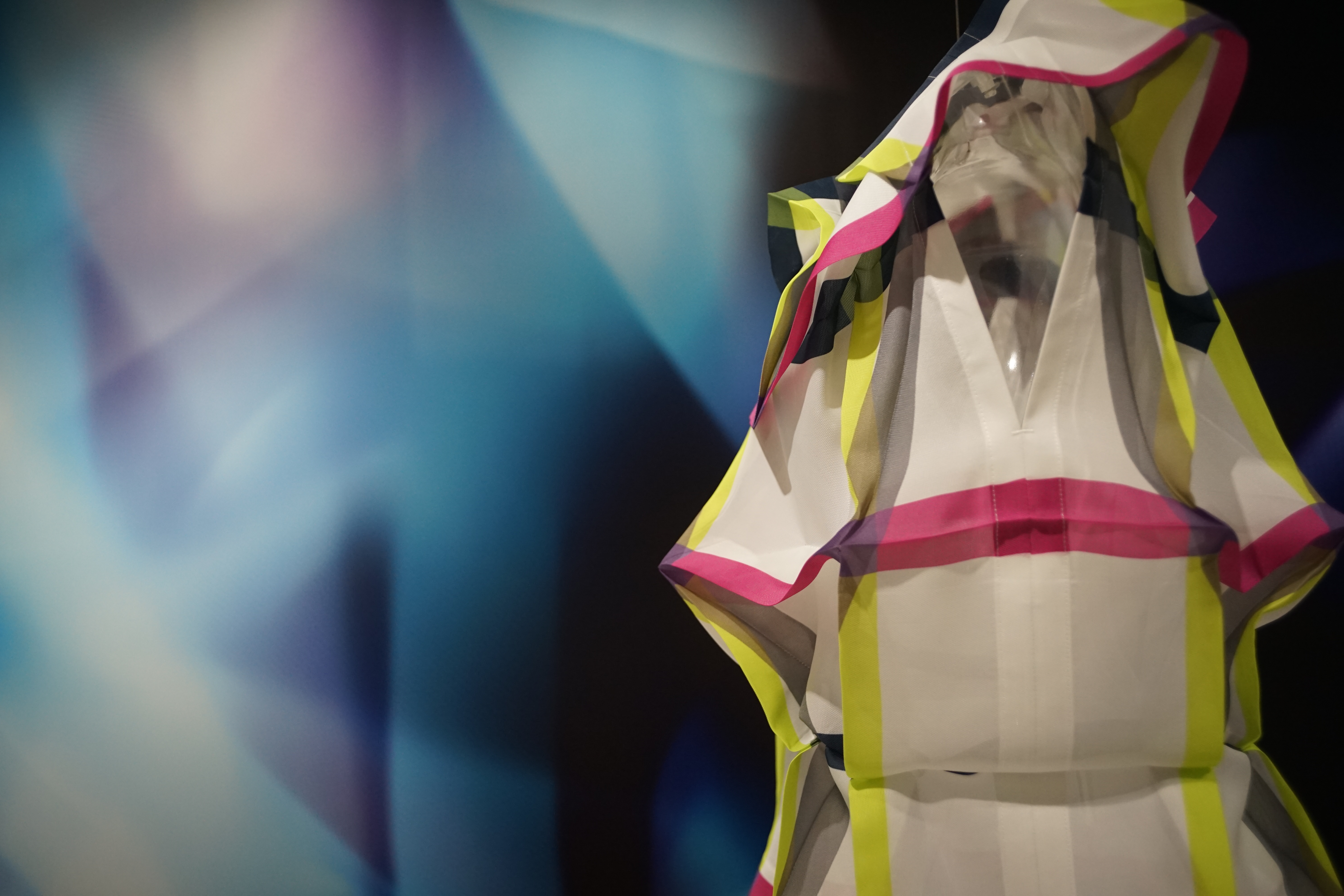
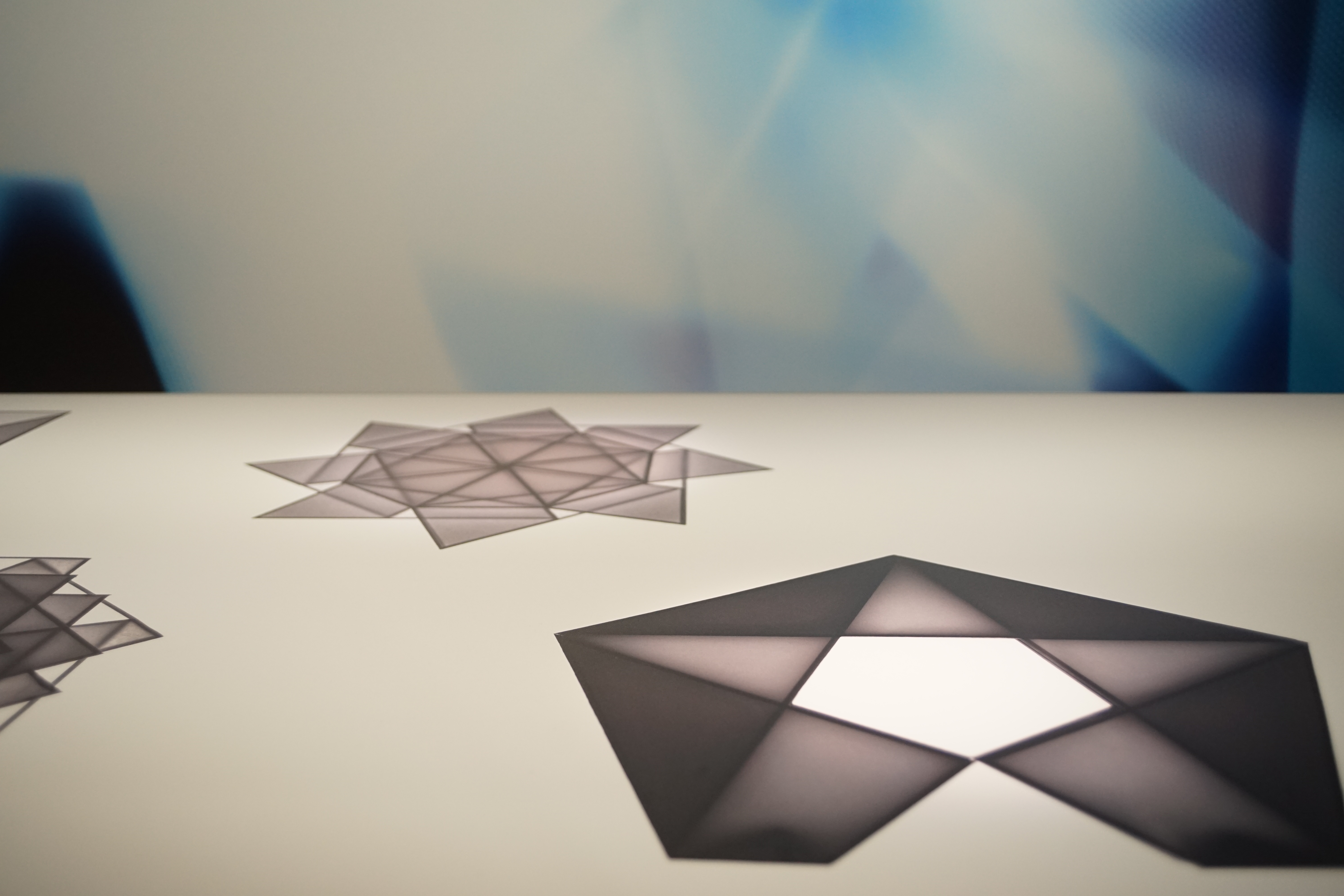
ISSEY MIYAKE SEMBA is not a gallery in any conventional sense, and that is precisely why it opens this route. At the Minamisenba location — called Creation Space — photographer Yoichiro Nishimura has turned the 132 5. folding garment line into a subject for camera-less image-making. His photograms lay translucent fabric directly onto photographic paper: light passes through the material, and the crossing structural lines that engineer a flat sheet into a three-dimensional garment register as abstract compositions — blueprints made visible without a lens. A parallel series of scangrams places design-stage folding models on a scanner, transmitted light revealing the pure geometry of the fold before it becomes clothing. The work matters here because it collapses two disciplines that rarely speak to each other. Miyake’s “ori” culture — the engineering of fold structures that transform flat fabric into wearable form and back again — turns out to share a logic with photography itself: both are negotiations between surface and dimension, flatness and depth. You enter a fashion space and find yourself standing inside a darkroom argument about what light can describe.
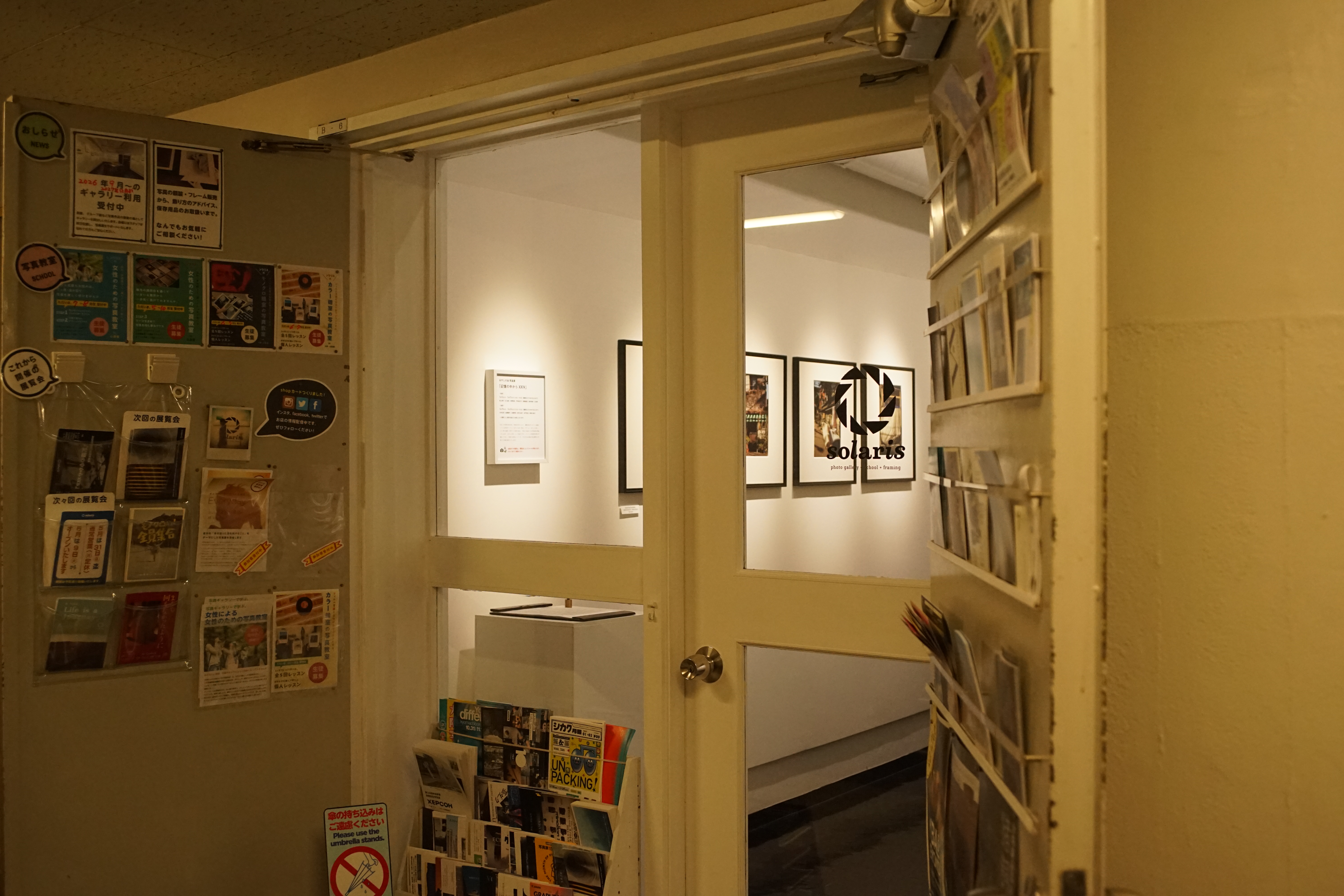
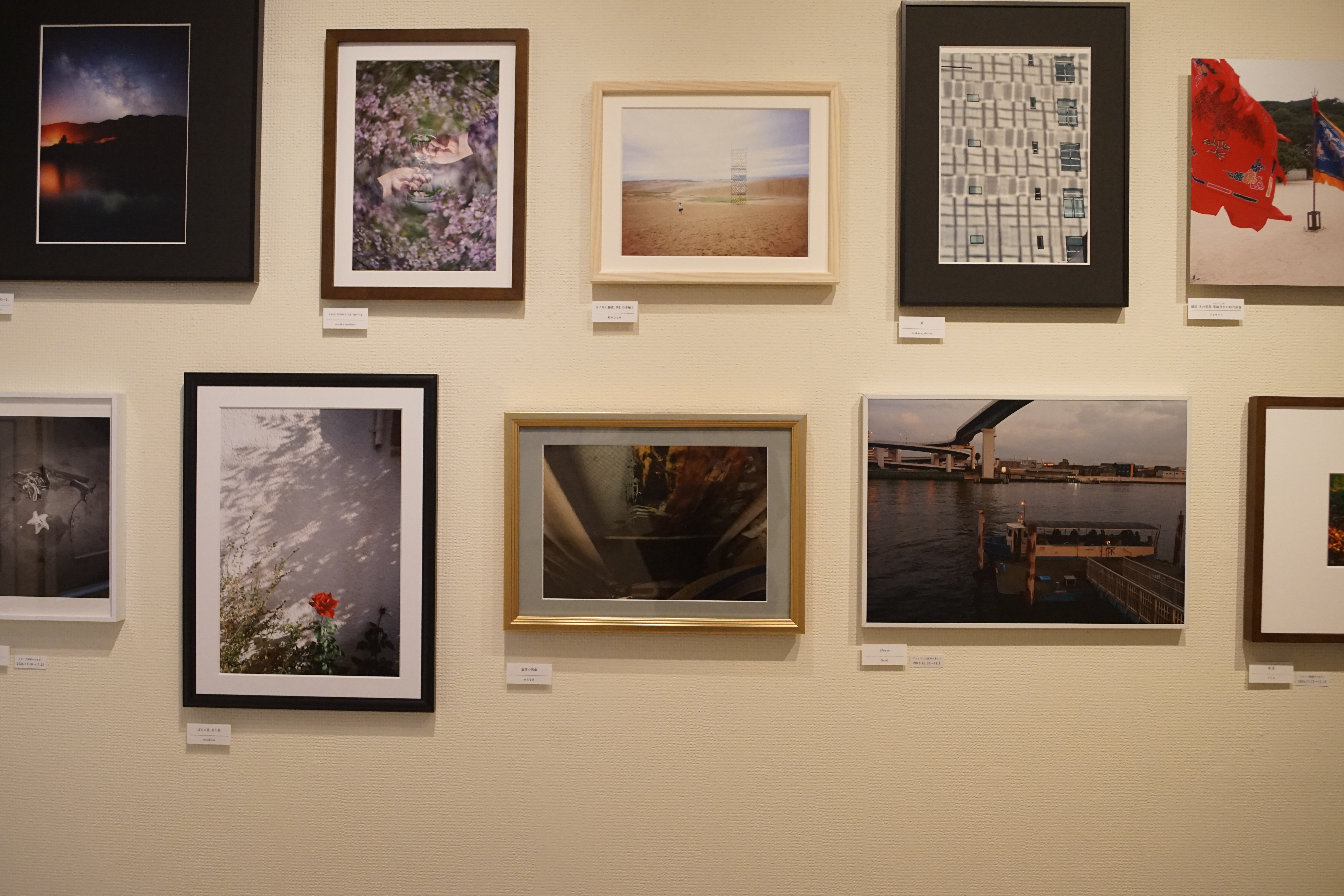
Two blocks south and one floor underground, Gallery Solaris operates from the basement of a building old enough that the staircase has a particular smell — concrete, damp, the faint mineral quality of walls that have absorbed decades of Osaka humidity. Solaris is one of a handful of spaces in the city dedicated entirely to photography. Not photography as a decorative medium, not photography shuffled in alongside painting and printmaking, but photography as a primary language. When we visited, the walls held "From Within Memory XXIV," a group exhibition by the Oyaji no Kai collective — a rotating group of photographers, most of them men of a certain age, who have been meeting and making work together for years. The collective model matters here. In a city where gallery representation remains difficult to secure, photographers in Osaka have historically organized laterally: shared exhibitions, rotating collectives, spaces funded not by a dealer's commission but by the artists themselves splitting rent. Solaris exists because of this culture, not despite it. The work on the walls was uneven in the way that group shows always are — but the unevenness is the point. You see a community thinking out loud.
Why do photography galleries cluster in this part of Osaka? The answer is partly economic — rents in Minamisenba remain lower than in the northern business districts — and partly gravitational. Once two or three photography spaces established themselves here, others followed, drawn not by foot traffic but by proximity to peers. It is the same logic that kept jazz clubs on the same three blocks of Kitashinchi for forty years: the audience finds you because the other venues have already taught them where to look.
Up a narrow staircase in a building with no elevator, Gallery Avi occupies a single room that its founder, photographer Daiki Fubuki, has run since 2005. Twenty-one years. In Tokyo, that figure would be respectable. In Osaka, where commercial real estate cycles are shorter and institutional support for small galleries is functionally nonexistent, twenty-one years is an act of conviction. Fubuki opened Avi as an artist-run space — a term that in Japan carries specific weight. It means no dealer, no stable of represented artists, no secondary market. It means the person who sweeps the floor in the morning is the same person who hung the work the night before. The current exhibition, "Each One's Practice 2026," marked the anniversary not with retrospection but with an open call: artists across disciplines showing recent work, the kind of show that treats a gallery birthday as a reason to look outward rather than back.
Artist-run spaces in Japan tend to follow a pattern. They open with energy, sustain through stubbornness, and close when the founder's stamina or savings run out — usually within seven years. The ones that survive past a decade become something else: not quite institutions, but landmarks in the mental map of a scene. Avi has crossed that line. Photographers in Osaka mention it the way they mention a particular darkroom or a reliable print lab — as infrastructure, part of what makes the work possible.
The walk from Avi toward Honmachi takes about fifteen minutes if you do not stop, but stopping is the point. Somewhere between the two — the exact location matters less than the rhythm — there is a lunch counter called Hanase. Obanzai: Kyoto-style home cooking adapted to Osaka proportions, which means slightly larger portions and no pretense that the food is anything other than what someone's grandmother would have made. A set lunch runs around nine hundred yen. The room is small. The menu is whatever was at the market that morning. You eat, and the eating does something necessary to the day — it breaks the gallery rhythm, returns you to the body, reminds you that looking is physical work and physical work requires rice.
North and west from Honmachi, the streets widen and the buildings grow taller. You have left the garment district behind and entered the corporate corridor that connects the business centers of Honmachi and Yodoyabashi. This is where Fujifilm Photo Salon Osaka sits — inside the Fujifilm offices, on a floor that most people in the building pass without entering.
Japan's corporate photo salons have no obvious global equivalent. Fujifilm, Canon, Nikon, Ricoh — each maintains dedicated exhibition spaces in major cities, staffed and curated, open free of charge. They are not vanity projects. They are not showrooms for equipment. They are functioning galleries with professional-grade exhibitions, operated by corporations whose primary business is manufacturing the tools that make the work possible. The logic is circular and, in its way, generous: we make the film, the film makes the photographs, the photographs deserve walls. The result is a parallel gallery system that runs alongside the commercial and artist-run spaces, absorbing none of their audience but expanding the total surface area on which photography can be seen.
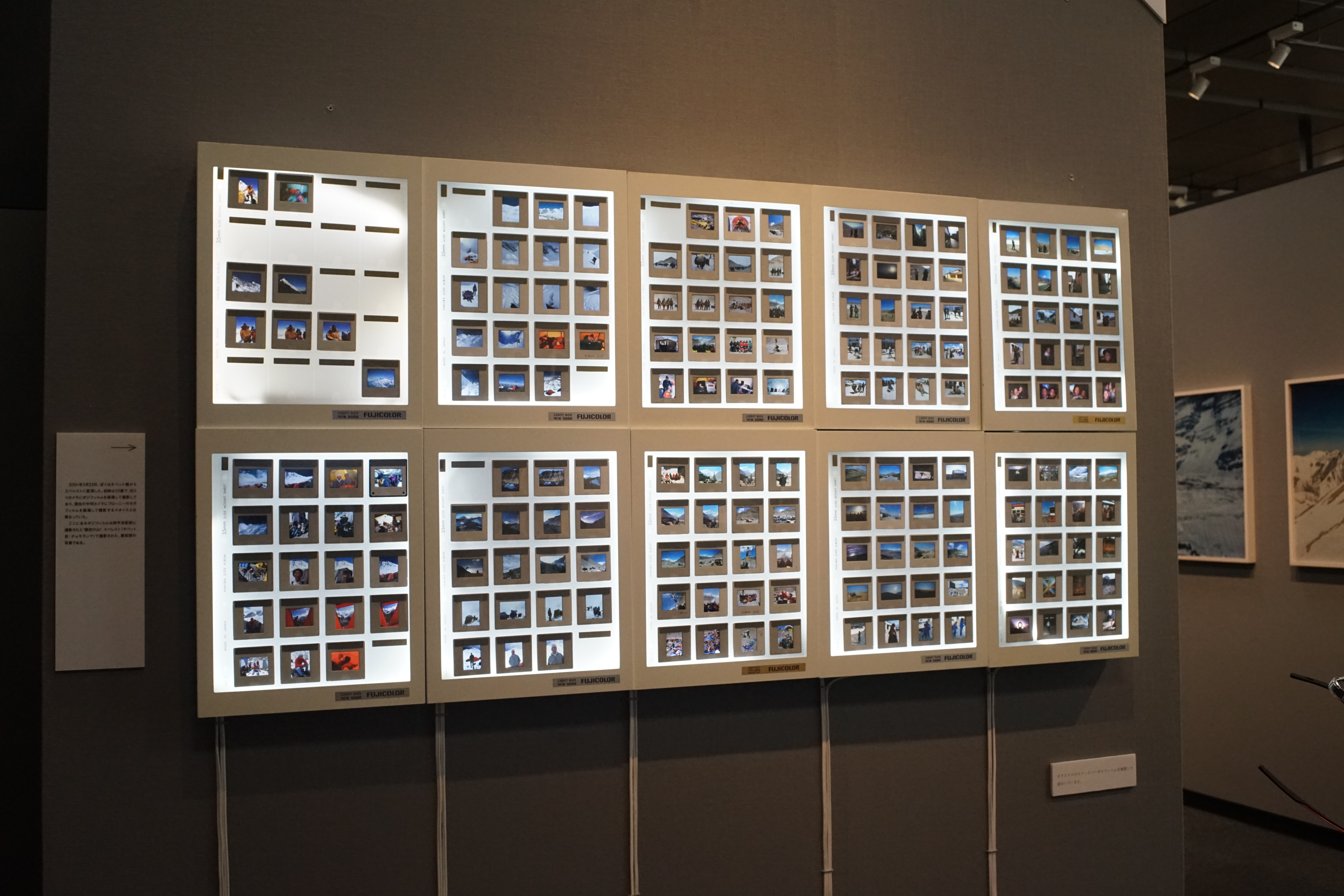
The exhibition the afternoon we visited was Naoki Ishikawa's "ASCENT OF 14 — 2001-2024." Roughly seventy silver-halide prints, large format, spanning twenty-three years and fourteen mountains — every peak on Earth above eight thousand meters. Ishikawa is known among mountaineering photographers for a kind of formal discipline that the subject matter might seem to resist: these are not adventure photographs. They are studies in altitude and light, composed with the patience of someone who understands that a mountain does not perform for a camera and that waiting is most of the work. The scale of the prints — and the scale of the project, two decades of returning to the highest and least hospitable places on the planet — produced a silence in the room that felt different from the silence in the smaller galleries earlier in the day. Not more reverent. More geological.
The shift from Fujifilm's institutional space to Kouichi Fine Arts in Edobori is a shift in almost every register. Where the salon is corporate, open-plan, and brightly lit, Kouichi occupies a converted space in a neighborhood that has been quietly accumulating galleries over the past decade. Edobori sits along the Tosabori River, west of the business district, in the zone where office buildings begin to give way to older residential blocks and the occasional warehouse. It is the kind of area that gallery owners describe as "still affordable" — the phrase that, in every city, precedes the phrase "no longer affordable" by about seven years.
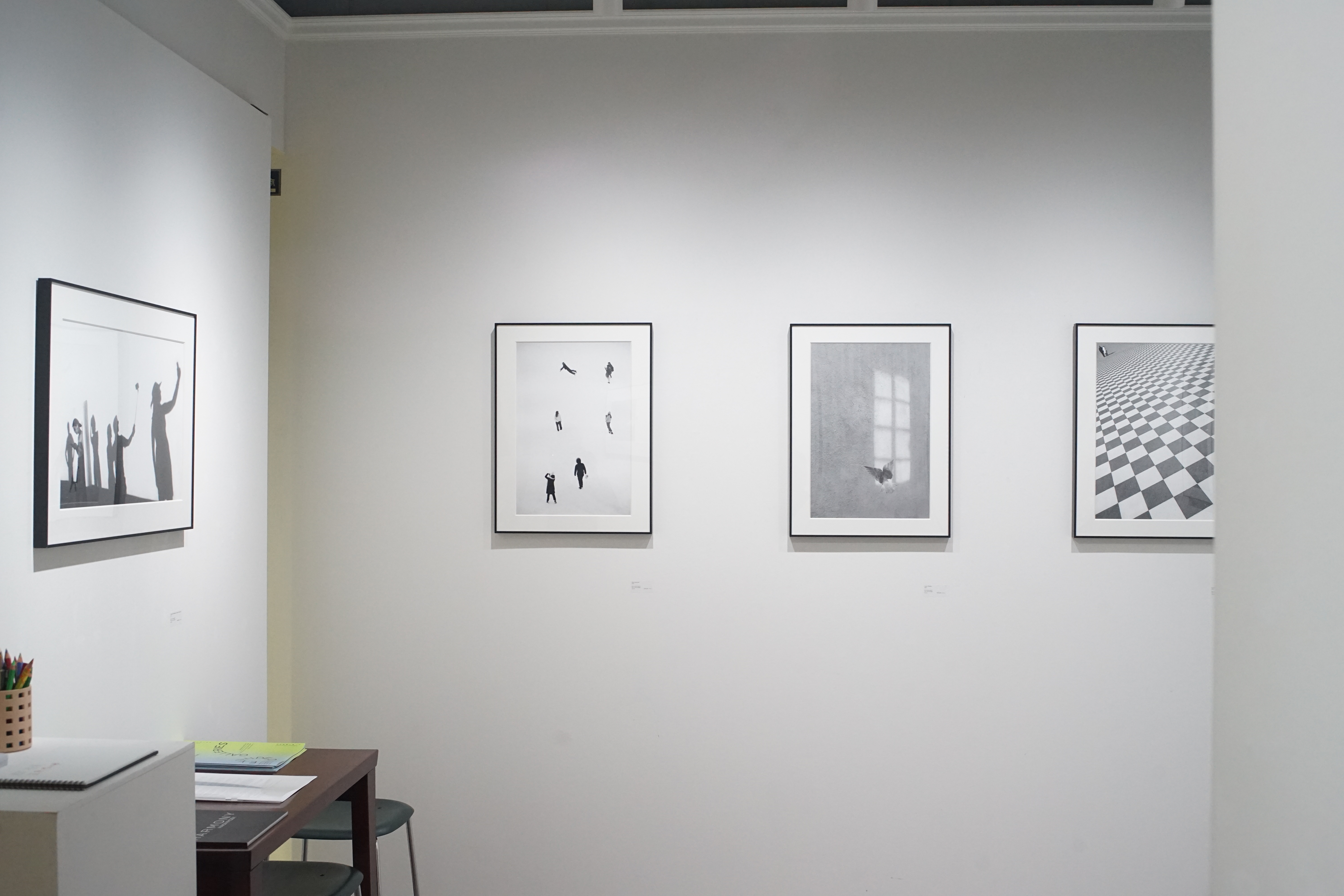
Kouichi deals in international fine art photography, which places it in a different economy from the spaces we had walked through earlier in the day. The exhibition was Marcin Ryczek's "Harmony" — minimal black-and-white images by the Polish photographer whose work circulates in the particular world of collectors and art fairs. The prints were precise, controlled, emptied of everything that was not essential. After a day spent in spaces defined by community — collectives, artist-run galleries, corporate patrons supporting a local ecosystem — Kouichi proposed a different model: the gallery as portal to a global market, where a photograph made in Krakow or Reykjavik hangs on a wall in Osaka and the conversation it enters is not local but transactional in the way that all serious art markets are transactional, which is to say, conducted in the language of value, scarcity, and trust.
The canal at Edobori catches the late afternoon light at a low angle, throwing long reflections off the water onto the underside of the Tosabori bridge. If you have walked the full route — Minamisenba to Honmachi to here — your legs know it, and there is a particular quality of tiredness that comes from hours of standing in small rooms, looking carefully at things that were made to be looked at carefully.
What connects these spaces is not medium or market or even geography, though the geography helps. It is something closer to a shared condition: each of these rooms asks you to slow down, to adjust your attention to the scale and tempo of what is on the walls. The corporate salon and the artist-run space could not be more different in funding, ambition, or audience — but in both, the contract between viewer and image is the same. You stand still. You look. The photograph does not come to you.
Walking back toward the station, the question that stays is not which gallery was best or which exhibition mattered most — questions that belong to a different kind of writing. It is something less resolved than that. Something about why a city keeps these rooms open, why photographers keep printing and hanging work in basements and on borrowed walls, why the act of looking at a photograph in a room — not on a screen, not in a feed, but in a room you walked to — still feels like it means something that the image alone does not contain.
Interested in exploring these galleries with a local guide?
Koh Yoshida, a certified Osaka tour guide and the curator behind ArtRoute, offers private art gallery tours covering the areas in this article.
Book a Guided Art Tour →Via Viator · Private tour
- ISSEY MIYAKE SEMBA Creation SpaceShinsaibashi
- Kouichi Fine ArtsNakanoshima & Higobashi
- Gallery AviShinsaibashi
- Gallery SolarisShinsaibashi
- Fujifilm Photo Salon OsakaHonmachi