Osaka Sculpture Tour: Walking Nishitenma's Hidden Art Galleries
Between Osaka's office towers and its older, quieter streets, five galleries and a sushi counter named after the seventy-two microseasons.
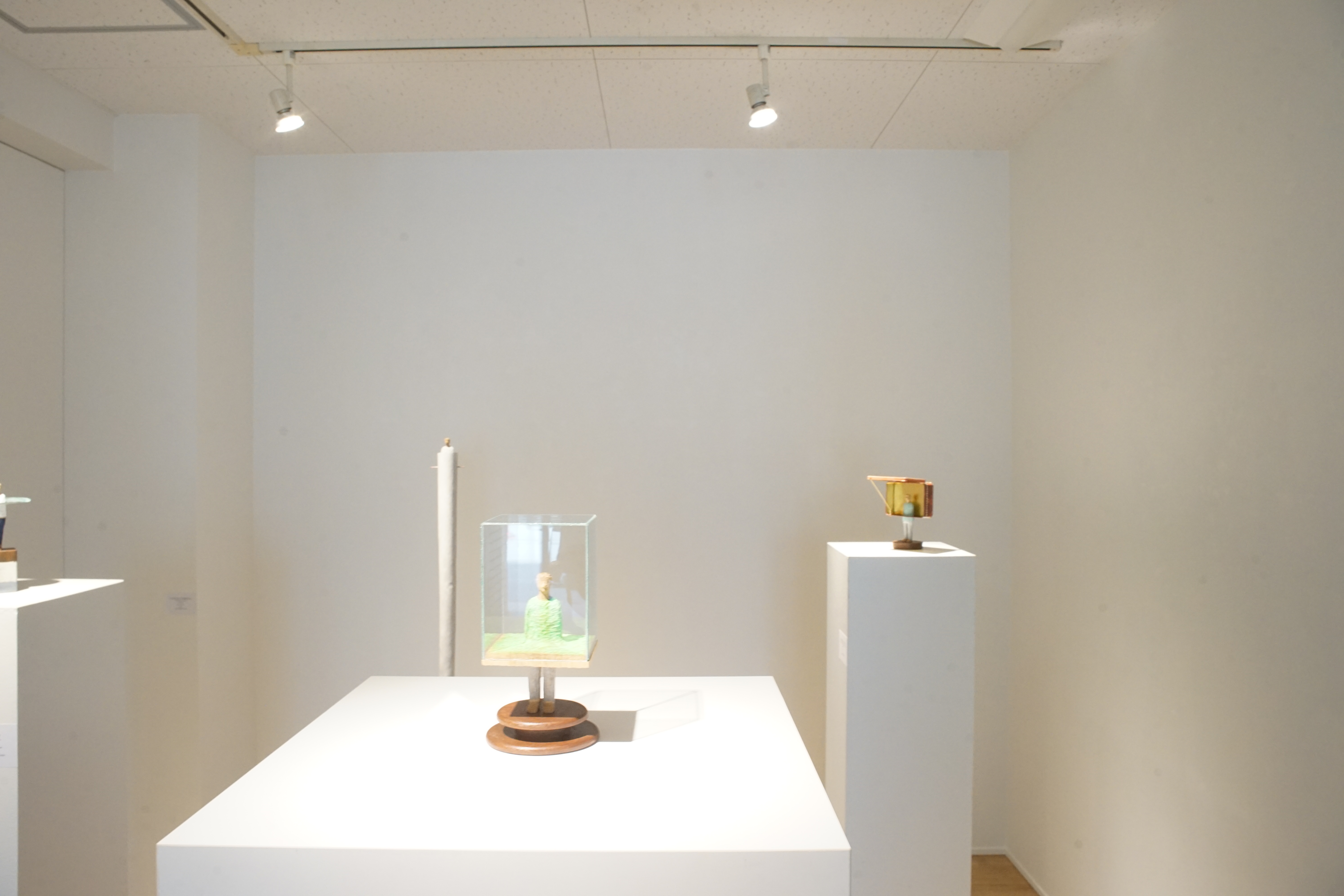
The sushi counter seats twelve. At half past eleven on a Tuesday, only three of those seats are taken. The chef works without speaking, his knife finding the seam between flesh and bone in a motion so practiced it has stopped being technique and become something closer to breathing. He sets down a cut of something silver and seasonal, names it — a word I have heard before but never retained, one of those terms that belongs not to a fish but to a particular week in a particular month, when the light falls a certain way and the water in the Inland Sea shifts temperature by half a degree.
The restaurant is called Shichijunikou. The seventy-two microseasons. In the old Japanese calendar, each of the twenty-four solar terms is divided into three — five-day increments so specific they carry names like "thunder raises its voice" or "the paulownia begins to flower." It is a system of time that has nothing to do with efficiency and everything to do with attention. You learn the name of a season by noticing what has changed since the last one.
Outside, the afternoon was beginning. We had five galleries to walk to, and several kilometers of pavement between them.
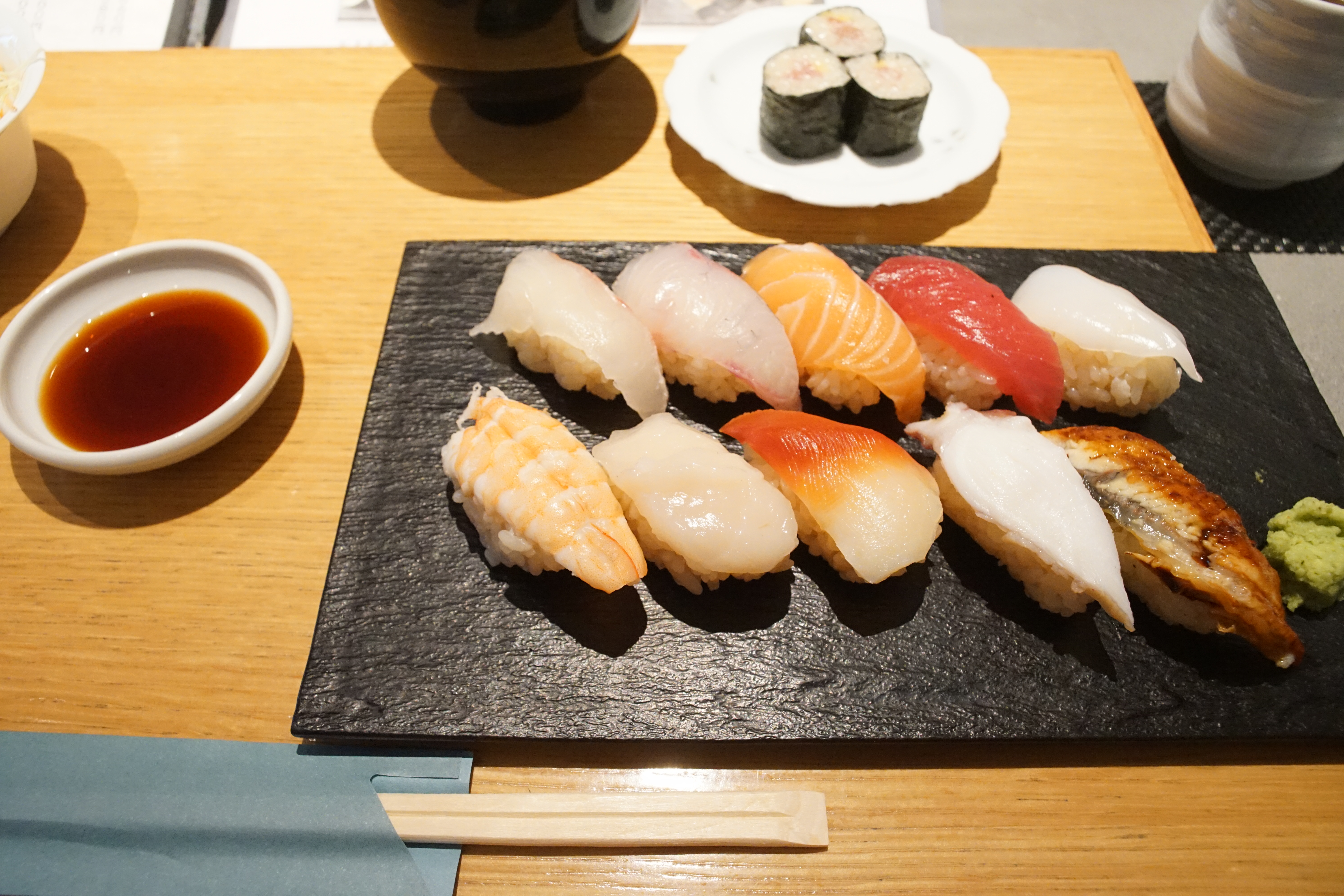
The Nakanoshima and Higobashi area sits where Osaka's business district begins to forget what it is supposed to be. Walk north from Hommachi station and the grid loosens. Glass towers give way to mid-century concrete. Then the concrete gives way to something older: narrow streets lined with signage you have to tilt your head to read, buildings whose ground floors have been converted and reconverted enough times that each one carries the sediment of three or four previous lives.
This is where Osaka keeps its galleries. Not in a dedicated arts district — the city has never believed in those — but scattered through the working fabric of a neighborhood that still functions as an office quarter during the day. The effect is that you encounter art the way you encounter a conversation overheard on the street: without preparation, without the particular readiness that a museum entrance imposes on your shoulders and your voice.
LADS Gallery has occupied its space here since 1988, though its sympathies reach further back, toward the restlessness of the Gutai movement — the postwar collective that insisted the act of making was itself the work, that a canvas torn open or a body hurled through paper was not a means to an image but the image entire. Gutai dissolved decades ago, but something of its restlessness persists in the artists LADS chooses to show. On the afternoon we walked through, Hiroshi Kitao's sculptures filled the room. "Your Shape, My Shape," the series is called — forms that seem to reorganize themselves depending on where in the room you stand. The Australian sculptor I was guiding that day circled one piece for close to twenty minutes without speaking. When she finally did, what she said was not about the work. It was about the space between the work and her body, and how that space kept changing.
That kind of encounter — where the object recedes and what remains is a quality of attention — is what Kitao's work produced in that room, a conversation between sculpture and the body moving around it.
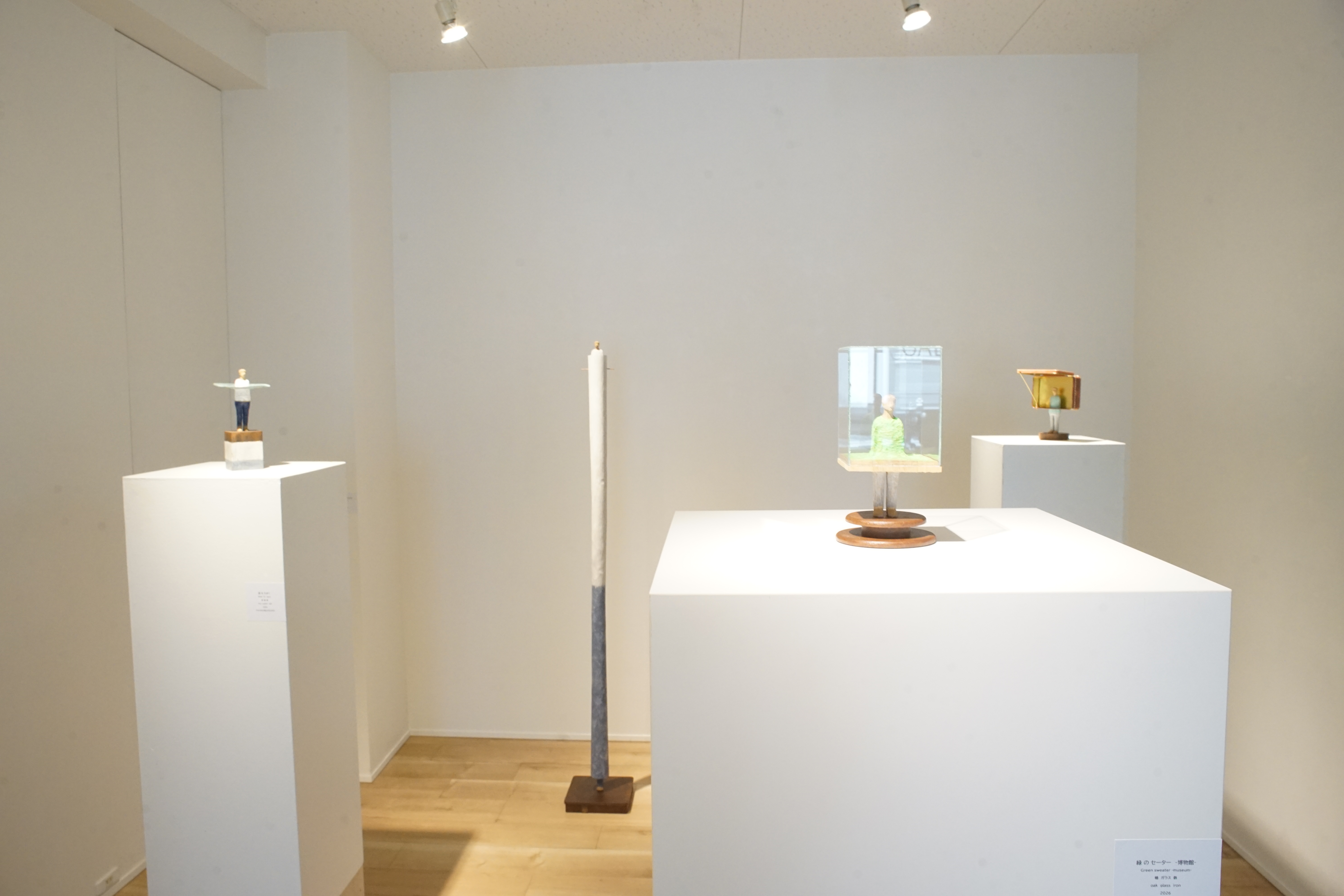
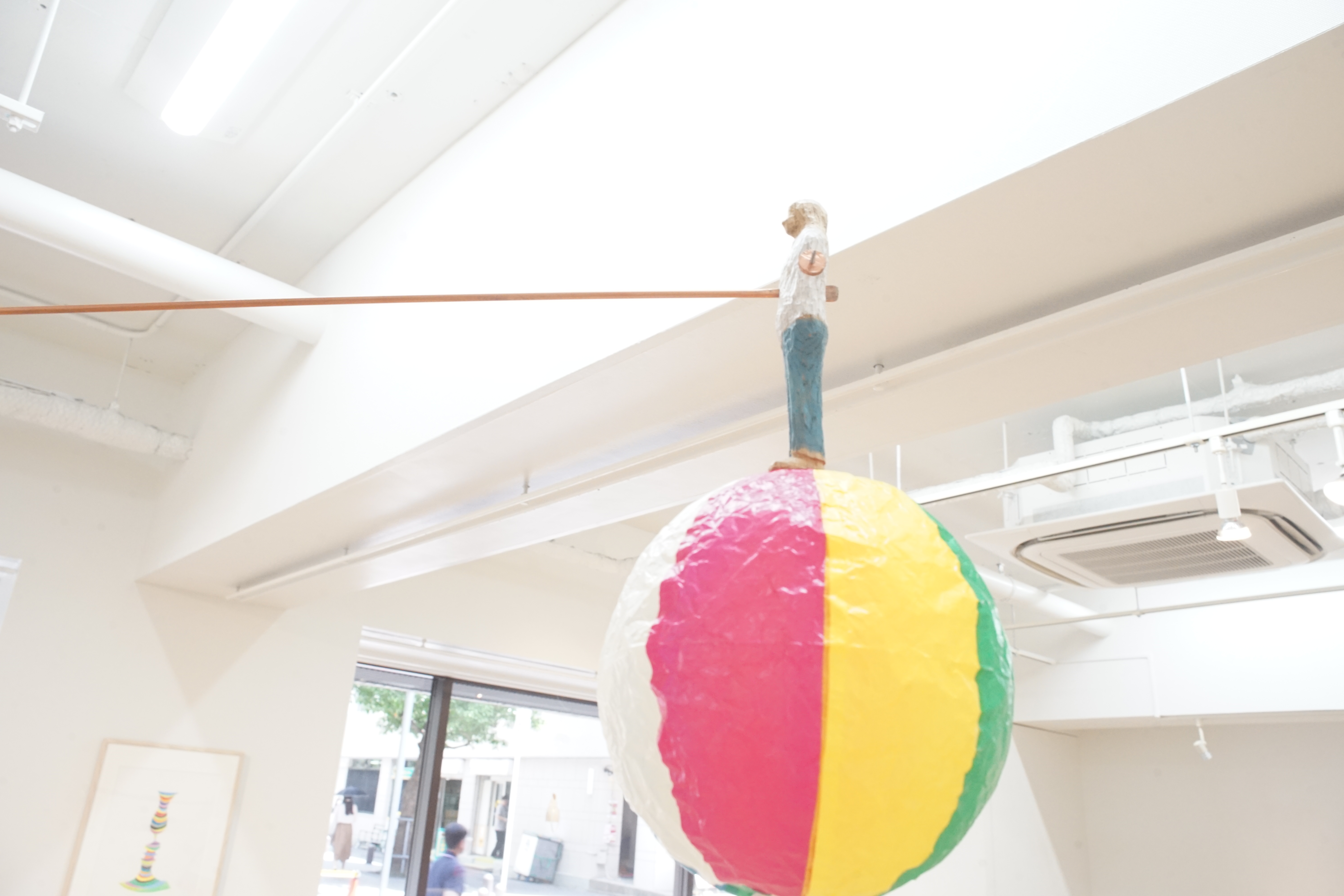
On the top floor of the Wakasa Building, Calo Bookshop & Cafe operates on a different principle. It opened in 2004 and has since become the sort of place that artists mention to each other in the way people share the name of a doctor they trust — quietly, specifically, only when it matters. The shelves hold what commercial bookstores cannot justify stocking: exhibition catalogs printed in editions of three hundred, photography monographs from presses that may have published four titles total, artist-made zines assembled by hand at kitchen tables. If you want to understand what is being made and thought about in Kansai's art scene at any given moment, the fastest way is not to visit galleries. It is to spend an hour here, pulling books from shelves and watching what falls out.
From Calo, the walk to O Gallery Eyes takes about fifteen minutes and crosses a small bridge over one of the canals that section Osaka into its many islands. You leave the Nakanoshima and Higobashi area behind — its wider streets, its proximity to the river — and enter Nishitenma and Minamimorimachi, where the buildings draw closer together and the signage gets older. The crossing feels less like a change of neighborhood than a shift in register, the way a conversation can move from public to private without anyone deciding to lower their voice. O Gallery Eyes is an outpost of a Ginza original — Tokyo pedigree transplanted into Osaka soil, where it has grown into something its parent could not have predicted. The day we visited, Hiromi Yamauchi's solo exhibition occupied the space. Her paintings slow perception. Not through complexity — through a kind of deliberate restraint, as if each mark had been considered not only for what it adds but for what it declines to add. After an hour in galleries where sculpture demanded physical movement — circling, crouching, stepping back — Yamauchi's work asked for stillness. The shift felt physiological.
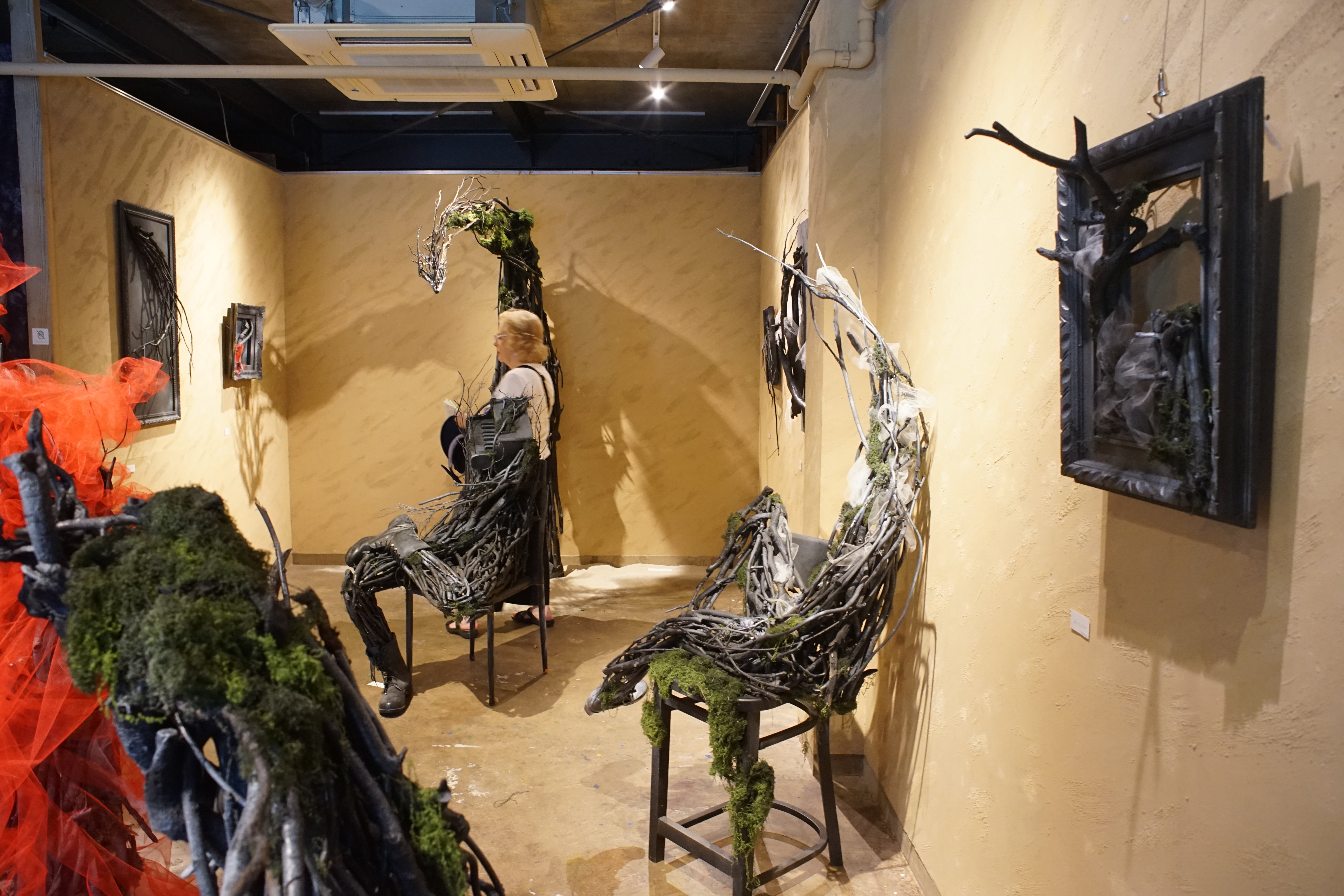
igu\_m\_art refuses category. The gallery itself is as much a statement as anything hung on its walls: sand-mixed plaster surfaces, an antique Moroccan door that should not work in a converted Osaka office building but does — not because it has been cleverly integrated, but because the whole space operates on the logic of things that have survived long enough to stop needing to justify their presence. Ryosuke Yamada's "Tomodachi" stood in this room the afternoon we visited. Human figures assembled from dried branches, lashed together at the joints, leaning on each other with the particular weight of bodies that cannot stand alone. Friends, the title says. The figures looked less sculpted than gathered — as if someone had walked a long distance collecting the right pieces and then discovered they already knew how to hold each other up.
The walk from igu_m_art to Gallery H.O.T stays within Nishitenma's quiet grid. Gallery H.O.T broke the day's pattern, and the break felt necessary. Tomoe Imai's watercolors — "Celestial Dreams, Earthly Whispers" — had nothing to do with sculpture. They were atmospheric, diffuse, closer to weather than to object. After hours of considering how things occupy space — Kitao's shifting forms, Yamada's branch-figures holding each other upright — Imai's paintings dissolved space altogether. A room that had been full of solid things all afternoon was suddenly full of air.
Yamaki Art has been open since 1969. In a neighborhood where galleries come and go with the rhythm of commercial leases, fifty-seven years in the same location is not persistence so much as geological fact. The exhibition that afternoon was Toshinobu Sugimoto's "Gentle Aerial Feelings," part of FESTART 2026 — carved wood with washes of color, each piece titled after one of the seventy-two microseasons.
The coincidence arrived without announcement. The day had begun at a sushi counter named for a way of dividing time into increments so fine they could register the moment when plum blossoms shift from white to pink. It ended with sculptures that gave those same increments a form you could hold, or at least stand beside. Between the two, five galleries had each proposed a different relationship between object and attention — between what is made and what is noticed.
A guide plans a route, considers walking distances and opening hours and the energy curve of an afternoon. But coherence — the particular feeling that a day has been about something, even if you could not say precisely what — is not something a route produces. It is something a neighborhood holds, the way a riverbed holds the shape of water that has already passed through.
These galleries do not advertise. Most of them do not face the street. Several require you to climb a narrow staircase in a building whose age you feel in the handrail, to a floor you would otherwise have no reason to visit. The effort is minor — a flight of steps, a short corridor — but it changes the terms of arrival. You do not wander in. You decide to enter. And that small act of decision, repeated five or six times across an afternoon, does something to the way you look at what you find inside.
What remains, walking back toward the station as the light shifts from afternoon to something not yet evening, is not a catalog of objects seen. It is closer to the feeling the seventy-two microseasons are designed to preserve — the suspicion that time, attended to closely enough, reveals textures that clocks are not built to measure.
Interested in exploring these galleries with a local guide?
Koh Yoshida, a certified Osaka tour guide and the curator behind ArtRoute, offers private art gallery tours covering the areas in this article.
Book a Guided Art Tour →Via Viator · Private tour
- Calo Bookshop & CafeNakanoshima & Higobashi
- LADS GalleryNakanoshima & Higobashi
- O Gallery EyesMinamimorimachi
- igu_m_artMinamimorimachi